top of page
PFAFF Innovations
UX DESIGN · SAAS · DESIGN FOR MANUFACTURING

INTRODUCTION
PFAFF Werkzeug- und Formenbau is a world-leading supplier of moulds for vehicle body sealing and glass encapsulation systems. Both them & their customers loose a lot of money & time in error management & maintenance in near-shoring automotive car door sealing parts. We were tasked to help build their first digital Ai product that aimed to make nearshoring profitable again through automated data management & troubleshooting through machine learning

MY ROLE
THE TEAM
TIME LINE
Responsible for conceptualisation, Research analysis, Product design, Design systems, delivery of key modules and feature areas.
2 Software Engineers, 1 Ai Engineers, 1 Interaction Designer.
September 2022 — Ongoing
My Role as the UX Designer was to come up though constant testing, a dashboard interface for the data-heavy manufacturing industry staff who have been collecting data & solving errors manually till now.
NEEDED EXPERTISE
Agile Team Composition
1 Product Manager
The product manager was responsible for maintaining correspondence potential users, research & keeping the team aligned with the goal through user story map
2 Software Engineers
The software engineers were responsible for creating feasibility of storage, processing & privacy while also developing the front & back end.
1 Ai Engineer
The Ai Engineer was responsible for creating data training models for Ai to be able to forecast anomalies and take feedback as training data.
1 Interaction Designer
The Interaction Designer was responsible for making user flows, wireframes & prototypes based on the story map.

CLIENT BACKGROUND
PFAFF Werkzeug- und Formenbau is a world-leading supplier of molds for vehicle body sealing and glass encapsulation systems. Their unique combination of craftsmanship and high tech enables them to offer system solutions from product development to volume production. With innovative dynamism, top precision and reliability.


Moritz H
CEO, PFAFF

Marc MS
Group CFO, PFAFF

Mathias S
Technical Expert, PFAFF

Mathias S
Technical Expert, PFAFF


1/1
They have been the industry leader in mould making and automotive sealing manufacturing for the better part of 65 years. And they are looking to diversify their know-how in more products than just mould making
BUSINESS MODEL
The B2B2B Context:
Our project was a crucial touchpoint in the automotive sealing industry as we represented our mould maker client’s interests in reducing the cost of nearshoring for most OEMs (Their clients) and providing value vis a vis time & money savings in their costs & wastage while also providing a superior customer service in the events of error & loss of time.
Tier 1 Manufacturers
PFAFF supplies the no of moulds as per requirements of the OEM, car model & total no of parts per order
OEM Manufacturers
They are the Original Equipment Manufacturers who are representing the car manufacturers needs and orders

Car Manufacturers
Car Manufacturers are the end of the supply chain who give the order to the OEMs for the amount of parts & the price per part

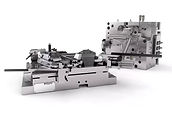


During a production error:
PRODUCTION ISSUES & ERRORS ARE USUALLY CLASSIFIED AS LOW PRODUCTIVITY IN SHIFTS. IT IS QUANTIFIED AS THE NO OF PARTS PRODUCED BY A SINGLE MOULD BEING LESS THAN OPTIMUM. SUCH ERRORS CAN RANGE FROM ANY THING FROM AN OPERATORS MISTAKE TO A MINOR INSTALLATION SETTING BEING OFF.

PFAFF Loses Money/Effort on Maintenance for simple issues like basic settings troubleshoot
OEM Manufacturers lose money every time the injection moulding system produces subpar parts (Loss in Productivity, Time & money)
THIS DOESNT FLOW TO THE END OF THE SUPPLY CHAIN
DIVERSIFICATION RESEARCH
Future Proofing Strategy:
PFAFF recently underwent a major rebranding trying to give it's image a much needed makeover.

The rebranding was intended to reintroduce a 65year old market leader as a digital pioneer in automated manufacturing in the sealing industry

POST COVID INDUSTRY TRENDS
Diversifying the Portfolio
After COVID hit, the car manufacturing industry & sealing industry by extension hit a steady plateau & it posed some serious questions against steady growth for PFAFF in the future. Which led the marketing team to probe for opportunities for PFAFF to use it's know how for

Unifying the Technical know-how
But diversification couldn’t be outside the domain of mould & sealing parts manufacturing, the expertise of which made PFAFF unique in the industry
Providing Value apart from moulds

Focussing on Digital Automation
PFAFF started focussing on researching areas of digital amplification in sealing manufacturing where it’s know-how can provide value
PFAFF also started looking into the future where the manufacturing itself can be taken to the next level through automation


CORE ASSETS
GOAL: Value through quality and innovation
PFAFF started focussing on researching areas of digital amplification in sealing manufacturing where it’s know-how can provide value


THE IDEA FOR THE PRODUCT
Automated Product Concept: Mold Solutions Based on Customer Needs
PFAFF had been working on a hypothetical Ai product which can help improve mould manufacturing for its customers to a great extent by optimizing productivity by saving time & money wasted on losses through errors, scrap & maintenance.
Current State of the Art Process:

CUSTOMIZATIONS AS PER CUSTOMER'S NEEDS
Different Modules Based on Level of Automatization Available
PFAFF had been working on a hypothetical Ai product which can help improve mould manufacturing for its customers to a great extent by optimizing productivity by saving time & money wasted on losses through errors, scrap & maintenance.

Automated Molding Process
Automated Handling of Profiles
Fully Automated Process
Customer needs: Basic Automated
Quick Setup+Low Investment
(<10k cars per year)
Customer needs: Semi-Automated
High Flexibility+Modular Setup
(10-100k cars per year)
Customer needs: Fully-Automated
High Output+Much Lower Risk
(>100k cars per year)

Common Existing Systems at a glance
After visiting the facilities of PFAFF as well as it's clients we got a chance to check the current systems in place.

PFAFF mould machine interface
HAS A OVERLOAD OF DATA WITHOUT ANY VISUALIZATION OR HEIRARCHY
THE INTERFACE HAS NO CENTRAL STRUCTURE
FOLLOWS AN ANTIQUATED TABULAR TASKBAR
POTENTIAL COMPETETOR BENCHMARKING
Digital Moulds


DOESNT ADD ANY VALUE OVER STORAGE & VIZUALIZING DATA
THE SYSTEM HAS NO KNOW-HOW OF THE CRAFT
DATA IS STILL ENTERED MANUALLY & THE SENSORS ARE RENTED & SOLD AS A PACKAGE
Insights Right off the Bat
Within our first round of interviews with multiple PFAFF customer, some of the assumptions of the PFAFF management were put to test by us

Customers were not thrilled with the idea of their data being collected & used for PFAFFs benefit
No one likes someone else's security camera in their house

The Main Purpose of the project is to communicate value both monetary & optimization
The Value of the product was not getting across in terms of optimization as well as money

The customers needed to feel secure about the privacy of their work style
The Car manufacturers are not really privy to most of their vendors situations & what bearing it has to the rates.

WEAKNESSES
Targeted User Story
In Order to validate/demonstrate our first 3 insights we built a simple user story involving a problem occurring in a moulding machine & it being fixed using a ‘magical’ Ai genie. We interviewed several different customer companies as well as PFAFF technicians on the other end who are trying to solve the problem


Customers agreed that this was pretty much how problems occur, most often they do call PFAFF about it.

The value when presented in terms of a generic project dashboard was apparent to the customer

The customers became iffy when it came the step where they had to share the data
CONTEXT PROBING SOLUTIONS
Aideation Workshop
We educated ourselves thanks to our ai engineer who taught us various Ai machine learning models and how they work & we ideated on possible applications or scalability on our context


Orienting with use case families
throughout the workshop we got aligned with different use case families within the Ai software models
Ideated with training data for our context
We immediately started seeing the scope for using various data in the manufacturing field as potential training data & the things that can be achieved through that
BUILDING KPI'S
AIxD principles toolbox
We also check the intersections of Ai & Interaction Design and what forms those cases usually take & did a workshop on them as a part of exhausting our technical options

USING LEAN METHODOLOGIES
Formulating KPI defining experiments
We were always asked to ‘Test our shit’ by many Growth Hacking Experts so we began our journey into gauging with user experiments & seeing their reaction

SECOND EXPERIMENT
Experiments: Moodboarding
We chose an unorthodox approach using moodboard to make the client (PFAFF) define their own image & feel to the digital era they were embarking on
Visualizing the end Product
This made the many of the users actually contemplate their interaction with the PFAFF organization in general & how they would like it to be
Rejection of Visual appeal
The more people rejected a visually enticing screen, more they got attuned to their needs
Contextualizing the format
It also helped them define the context of eh

THIRD EXPERIMENT
Experiments: Dashboarding
We acted on this based on the hypothesis that, seeing as it’s a B2B product, heightened usability of this product (Ex Snapchat, Netflix) would be counterproductive to the user satisfaction so we tried testing a more user friendly dashboards against maximal ones.


FOURTH EXPERIMENT
Experiments: Honeypotting
Through discussions with the PFAFF management we found out that they did their own research regarding the market & pricing for such a product & the core finding was that any kind of ‘freemium’ type conversion strategy would be counterproductive to communicating the value proposition
https://pfaff-innovation.webflow.io/


BEGINNING TO TEST
Experiments: Data Sharing
& Privacy
Through discussions with the PFAFF management we found out that they did their own research regarding the market & pricing for such a product & the core finding was that any kind of ‘freemium’ type conversion strategy would be counterproductive to communicating the value proposition

GOING THROUGH PRODUCTION DATA
Mapping KPIs & Building the Dashboard
By this time we heard it from too many users that the core of the platform is the dashboard which should be so unified in it’s panoptical view of the workshop with the entirety of it’s projects & allotted units
Going through projects reports
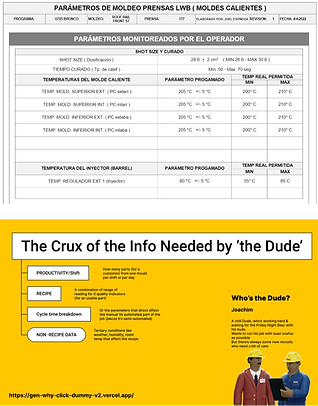
Role-Playing

Creating a hierarchy of all Parameters based on the frequency of their occurrence during errors

TESTING STAGE
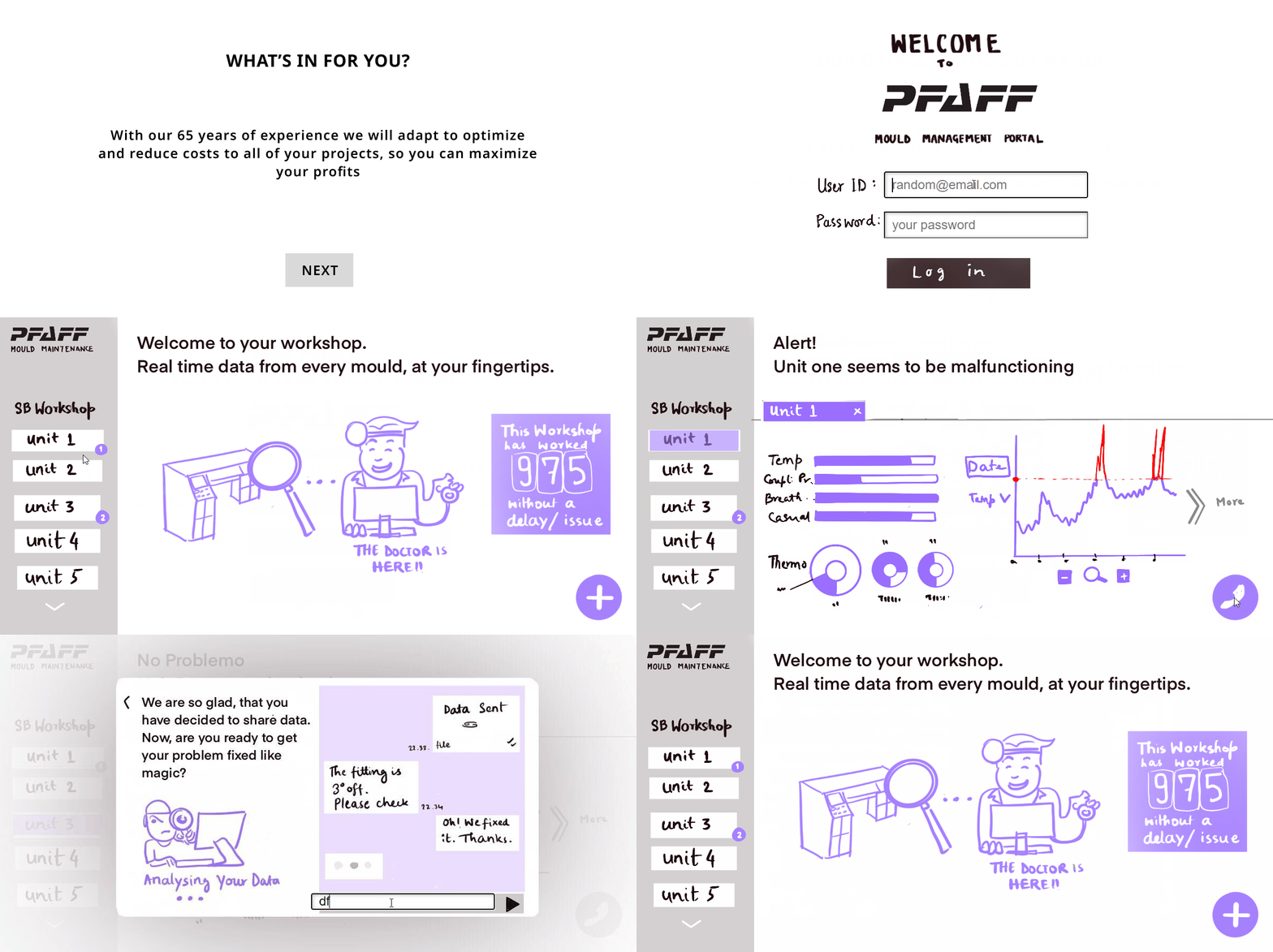
First Prototype: Sketch dummy
This was a basic sketch dummy that was supposed to be a conversational artifact for us to start gauging with PFAFF's customers at different levels of their respective organizations.
https://gen-why-click-dummy-v2.vercel.app/
WIREFRAME
Second Iteration: First Dashboard Wireframe
The first wireframe came after the feedback of the sketch dummy came back positive and the next step demanded testing the anatomy of the dashboard & the intention of how the users responded to the core KPI’s of the manufacturing system.

Project Dashboard
(Browsing Projects through the Nav Bar)
Unit Dashboard
(Clicking on the less productive unit in the layout)
RAISING THE FIDELITY
Third Iteration: Mid-Fi Wireframe
This iteration started with rejection of a project navbar in lieu of a collapsible burger menu with units on display instead. The Mid-Fi dummy was a step forward in the visualization of the lineup along with the data with respect to the particular projects and units and covering the whole workshop in the user journey steps
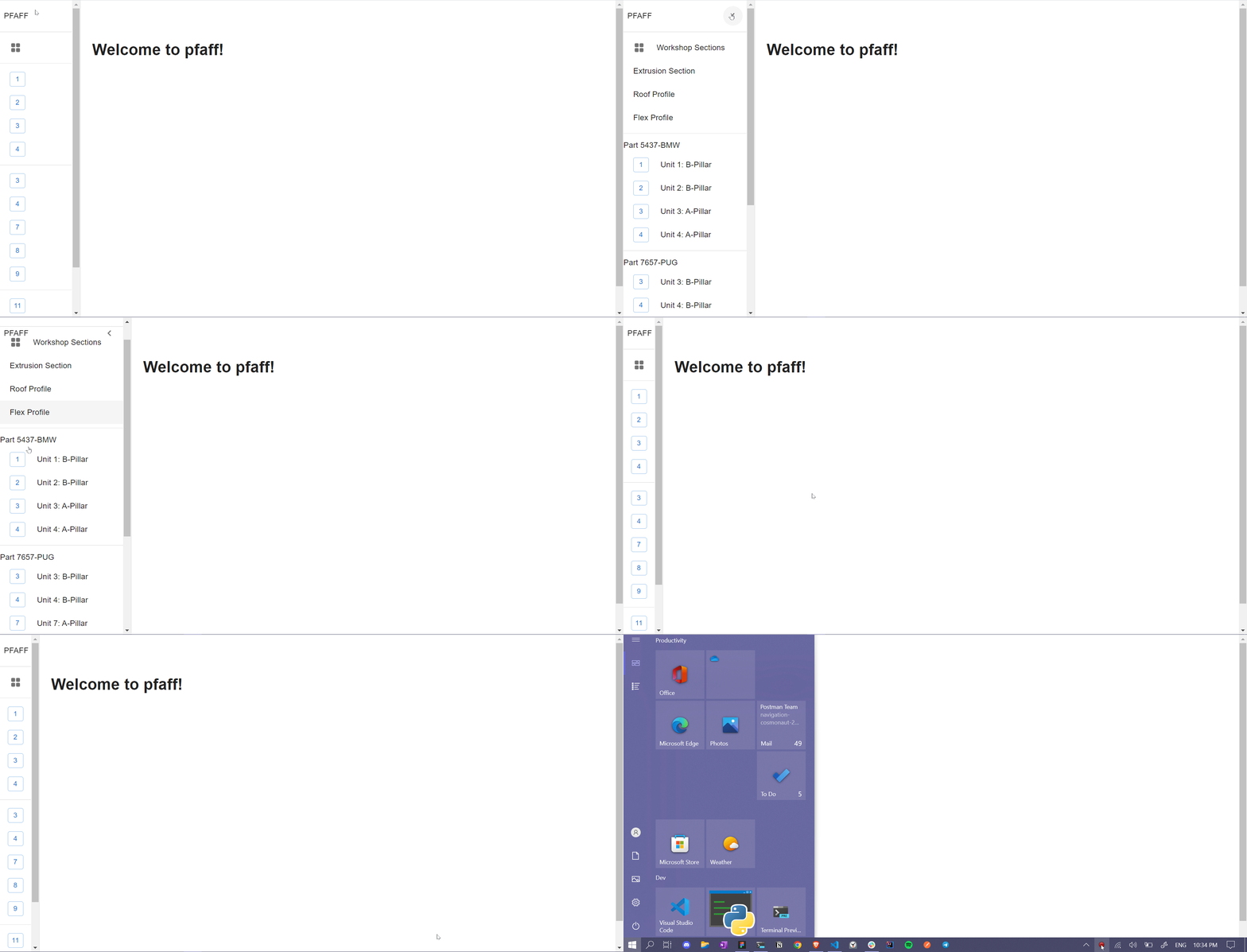
Project Dashboard
(Browsing Projects through the Nav Bar)
Unit Dashboard
(Clicking on the less productive unit in the layout)

Workshop Layout
(Browse Projects)
Project Layout
(Browse Units)
Unit Dashboard
(Browse Parameters)
HIGH FIDELITY
Fourth Iteration:
Information Architecture for an Ai Product
The first wireframe came after the feedback of the sketch dummy came back positive and the next step demanded testing the anatomy of the dashboard


Encouraging Human-Centred Amplification over Amputation (Reverse Training Data)

Shortening the Learning Gap for a New Recruit through Dynamic Recipe data
HI FIDELITY
Fourth Iteration: Hi-fi Prototype
The final user flow integrated changes that were cultural such as removing the list of log in’s per shift. We also doubled down on the user’s awareness about their privacy and the data collection safety.
https://gen-why.dpschool.app/
https://www.figma.com/file/PUkmEEEkUq0oDasfj1En3O/Gen-Why-Sprint-Work?node-id=9%3A4&t=m8HJUDT2qIksrewm-1


Product Demo
We went through a bit of the production process for the client to have an idea about what the tone and the demo of the pilot should be all about
LOOKING BACK
Reflections: Prepping for the Pilot
We chose an unorthodox approach using moodboard to make the client (PFAFF) define their own image & feel to the digital era they were embarking on

Further Visions for the Product
Raising Request/Chat (The chat/ conversation/ and raise request feature needs to be tackled immediately after getting feedback from users as).
Settings + Tutorials (The settings has to be figured out regarding changes and edits to a current projects. Pulse it also needs to have a provision for a quick onboarding for a new user).
Add Project/ Workshop Layout maker (The system for commissioning & decommissioning projects as well as the custom set up of workshop layout as well as allocating units to certain projects)
Ai Potential for the Future
Backend to-do list for Pilot
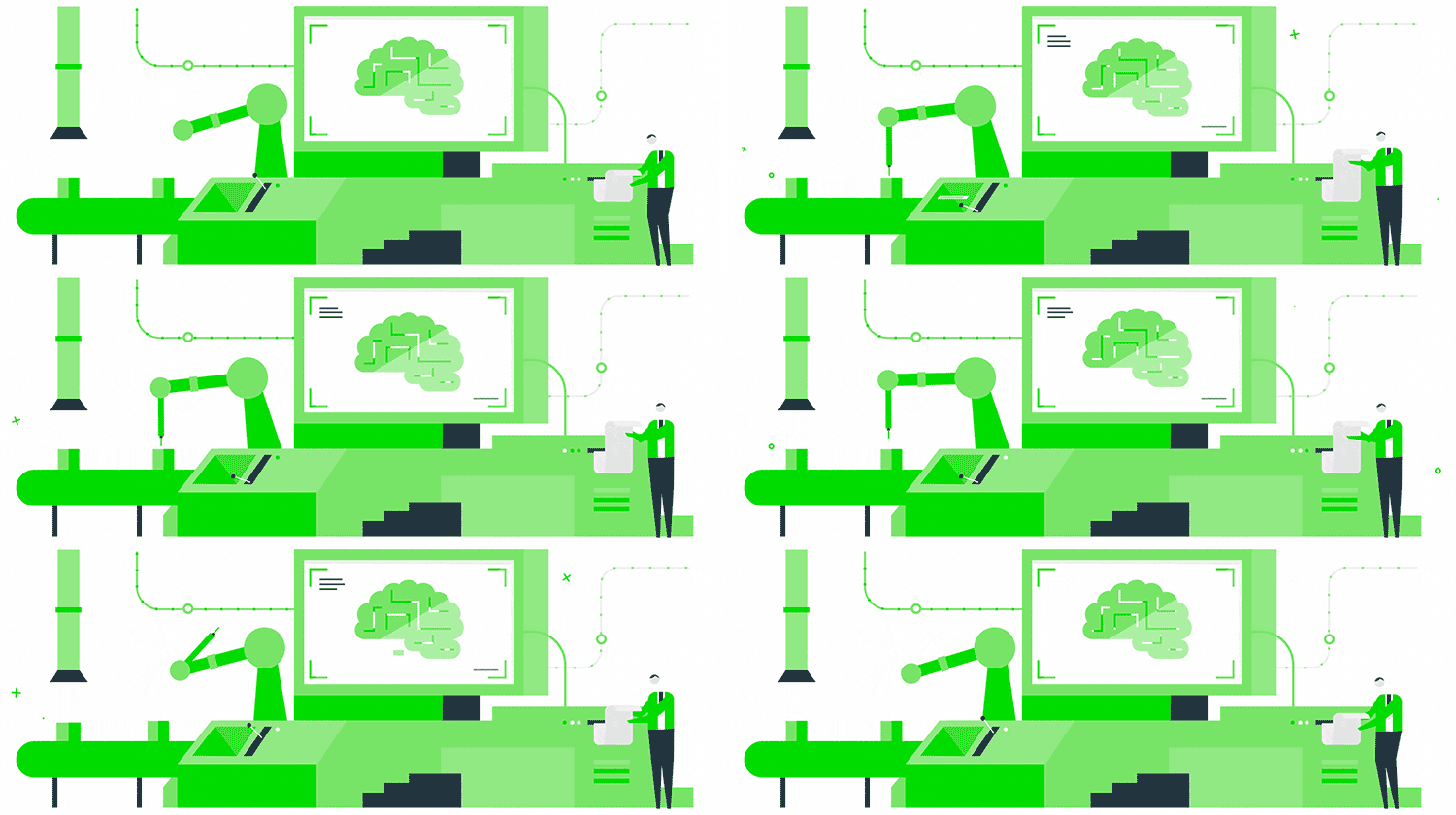
Ai assisted service desk to automatically review the checklist of possibilities and pinpoint the problems faster , reduce repetitive work and answer frequently asked questions
Computer Vision are simple, low-cost solutions for mistake proofing
Predictive Intelligence to determine the future value of certain KPIs based on historical data, predict failures of systems and intervene automatically to prevent them.
Collecting Data from Sensors
Sensors: For POC we are using Arduino temperature & humidity sensors to get real-time temperature & humidity data from the environment
Sending Sensor data to the Cloud: We use MQTT protocol to send data to our backend server. HiveMq is a public MQTT broker that collects the data from the sensor & allows our backend to get those data from there. It works on the Publisher Subscriber Architecture
Challenges that may come: Verifying the validity of the data from the sensor for different workshops
Handling & Analysing high speed sensor data.
bottom of page